Turn the 'Wait Before Water' Moment into a Fun Game for Toddlers (12–36 Months)
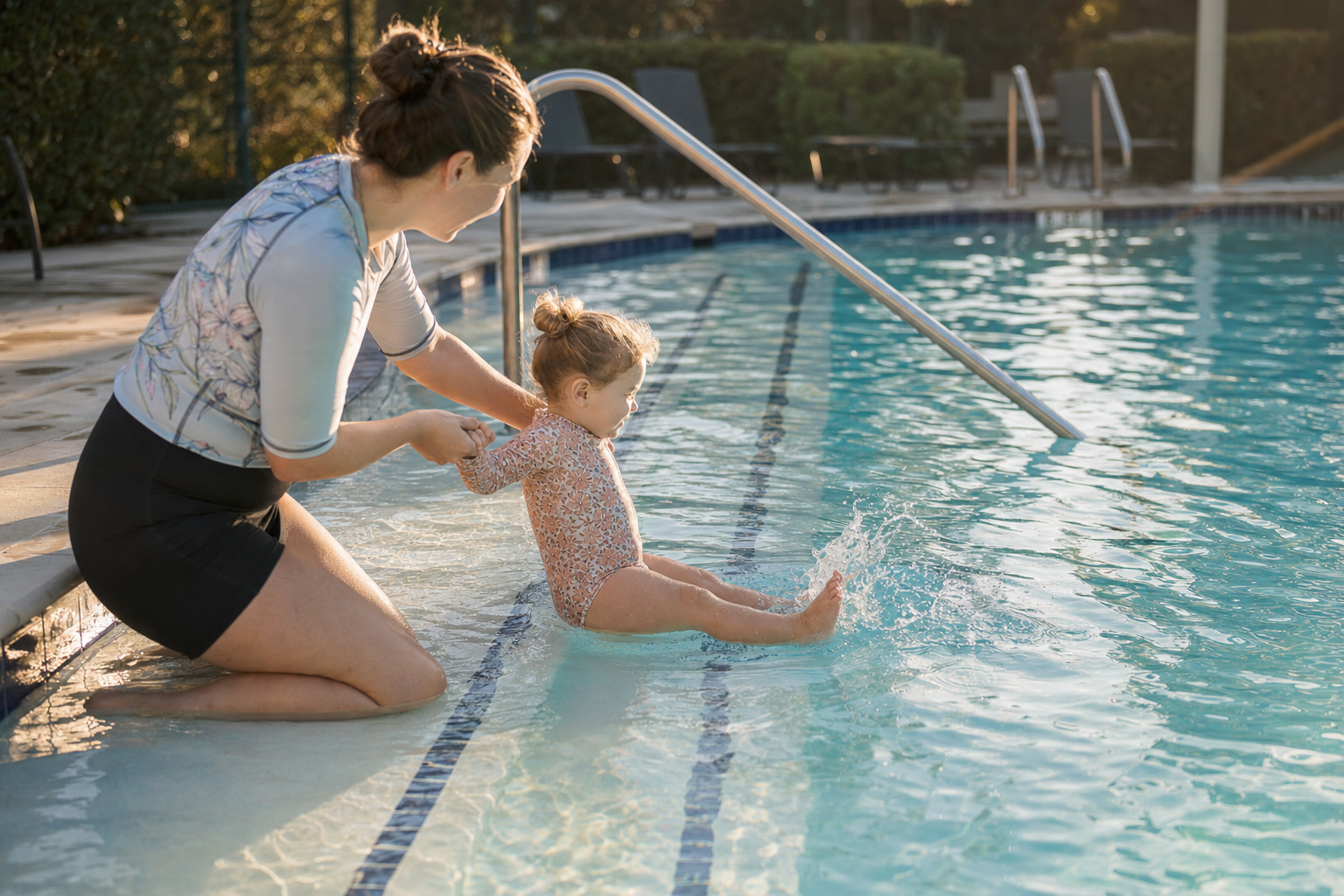
You start walking toward the pool edge with your toddler, and before you can blink, they're sprinting straight in. Teaching a toddler to wait before pool entry isn’t just about stopping the rush—it’s about building impulse control, listening skills, and safer pool habits. Here’s how to do it with playful routines that work for ages 12-36 months, without turning swim time into a battle.
Why Stop-Pause-Look Routines Matter
Toddlers are natural explorers. They see glimmering water, hear its splash, and their bodies want to dive in—fast. But water doesn’t wait. Safe pool entry requires them to learn to stop, sit, or pause, turn toward an adult or wall, and enter in a controlled way. Experts say that pairing entry with getting back to the wall every time builds a reflex to orient toward safety. Feet first, every time, until they’re formally taught diving.(waterwisekids.com)
A “safe pool entry” routine often starts with simple cues like “Wait. Sit. Turn. Slide. Hold.” Teaching toddlers in this 12-36 month window that entry requires asking permission or checking in with a caregiver helps reduce impulse-driven rushing.(swimy.org) It’s not about strict discipline—it’s about forming habits so they become automatic when the pull of water is strong.
What Do You Practice & Where
You don’t need formal swim lessons to start. Use bath time, backyard pools, or gentle lessons to make practice natural and repetitive.
Begin with games that build safety before you ever enter deep water. For example, “wall walks” where toddlers move sideways along the pool edge holding onto it, or “treasure reach” games with floating toys just out of reach. These build trust with the wall and teach children where to return when entering or exiting.(aqzog.com) Always practise shallow, calm water sessions where you’re within arm’s reach. Supervision is non-negotiable. The American Academy of Pediatrics recommends touch supervision for toddlers in or near water.(healthychildren.org)
If you want a structured way to build water confidence at home, the 10-Week Plan guides you step by step.
If you take lessons—or follow a program like the 10-Week Plan from swimy.org to structure both class and home practice—you can reinforce the same routines in both settings. That builds consistency.(swimy.org)
[[ctababy]]
Fun Game Ideas to Teach “Wait Before Pool Entry”
These playful routines combine safety and joy. Use simple words, use calm tone, and don’t laugh or chase when your toddler bolts—those reactions can reinforce the very impulse you’re trying to curb.
One game is “Safe Step-In, Safe Return.” Sit your toddler or let them stand at a shallow step, give a clear cue like “Ready-set-step in,” help them enter feet first, then immediately guide them toward the wall or steps. As they gain confidence, offer small stretches away from the wall with your support.(aqzog.com)
Another is the “Stop-Look-Ask Game.” At poolside (or even inside at a bathtub), teach your child to stop at the edge, look to see if an adult is ready, check if it’s safe (sharp edges, depth, other swimmers), and then ask “Can I go in?” Sometimes this is literal; other times you model the behavior repeatedly until it becomes second nature.(waterwisekids.com)
You can also turn breath control and face-in-water into games. Blowing bubbles, “birthday bubbles,” dipping chin or cheeks near the surface—all under supportive supervision—helps reduce fear of water and teaches them to pause when needed.(aqzog.com)
Common Pitfalls & How to Avoid Them
A major pitfall is only practising rules during formal lessons. Habit needs repetition: home, playdate, bath-time. If your child only hears “stop” during class, impulse chances win elsewhere.(swimy.org) Another trap is overloading with words. Too many steps or complicated language will confuse a preschooler. Keep routines simple: one short cue like “Stop. Sit. Slide. Hold.”(swimy.org) Finally, it might seem innocent to laugh or chase when your toddler bolts to the water—it looks playful. But laughter can feel like encouragement. That undermines the “wait” you’re teaching. Stay calm, firm, and consistent.(swimy.org)
Safety Caveat: Keep It One Layer Among Many
Practicing these games is invaluable. But games alone are not enough. Never replace secure barriers, locked gates, or vigilant supervision with routine games. The American Academy of Pediatrics emphasizes multiple layers of protection—fencing, supervising adults who stay within arm’s reach, and swim skills.(healthychildren.org) Always use games to reinforce safety, not replace it.
Toddlers learn by repeating small habits. The moment they understand that water requires permission and that pools aren’t free zones, you’ve made a huge leap. With calm routines, playful games, and safety always in view, those high energy dash-for-water moments start becoming teachable pause-before-play opportunities.
120+ swimming exercises sorted by age — with video and instructions. Developed by swim instructors, completely free.

120+ swimming exercises sorted by age — with video and instructions. Developed by swim instructors, completely free.