Warm-Ups for Babies Who Just Woke: Gentle Five-Minute Pool Transition
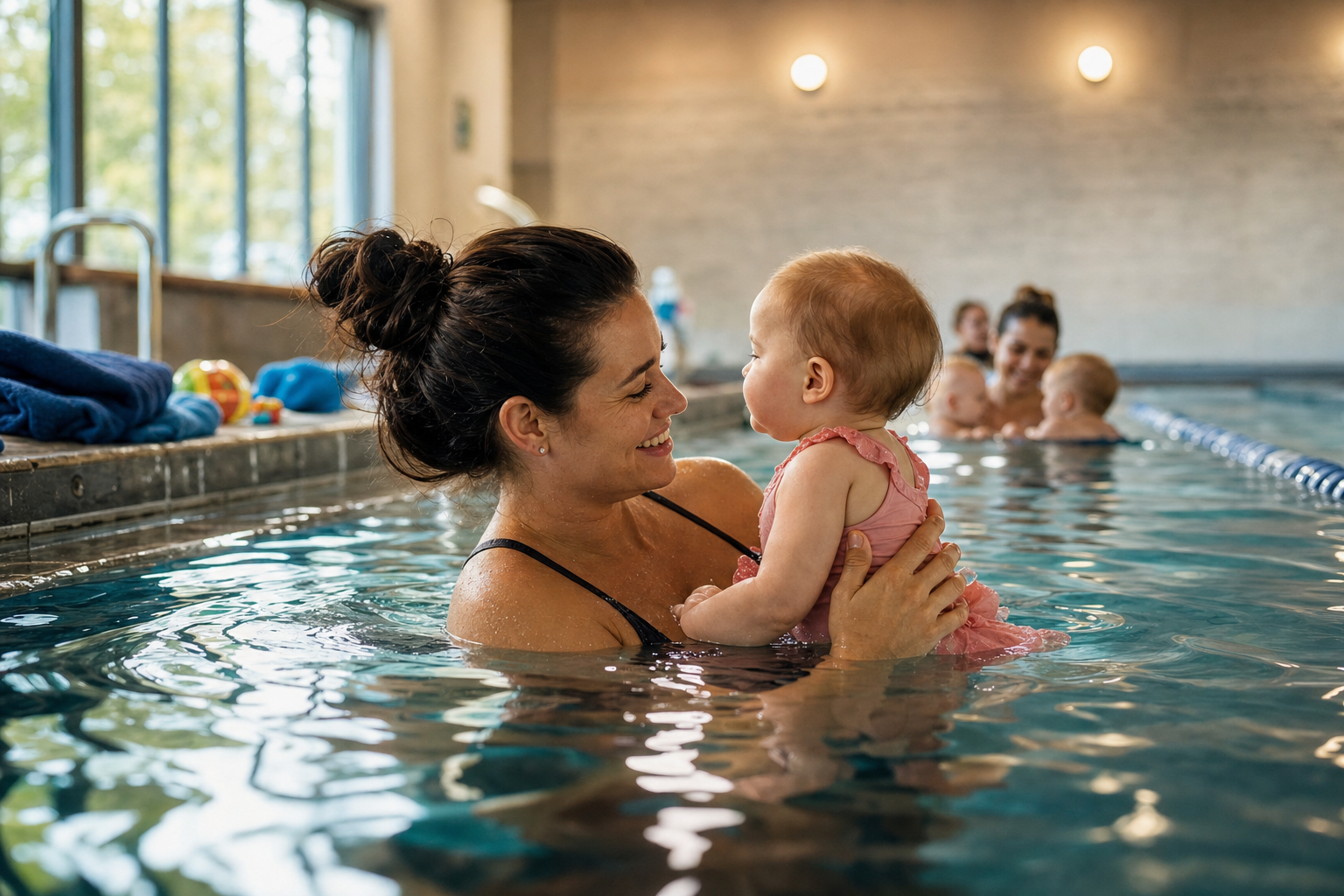
When babies arrive at swim class straight from a nap, the shift from quiet rest to water play can feel overwhelming—for them and for parents. A soft early warm-up helps smooth that wake-up curve, builds comfort, and supports readiness before you move into songs, splashes, or face-wetting. What follows is a gentle, five-minute baby swim warm up routine designed for infants and toddlers (0-24 months), plus ideas for reading their cues and keeping safety front and center.
First Three Minutes: Settling In with Cuddle Holds and Slow Sways
As soon as you enter the pool, position your baby against your chest or hip so they feel your warmth and heartbeat. Use cuddle holds, where your body wraps around theirs in a soft, secure embrace. Hold their head and neck gently; let your baby rest their cheek on your shoulder so they receive comforting support like being in a cradle.
Transition by doing slow sways or soft oscillations—rocking left to right, dipping slightly. Keep your voice low and soothing. Whisper simple cue words like “ready,” “settle,” “nice and slow.” These frames start creating predictability and trust; over time, your baby learns that “ready” means something gentle is about to happen, rather than chaos.
Next Two Minutes: Shoulder-Deep Settling and Light Sensory Touch
Move into shallower water so that your baby’s shoulders are just under, but face stays completely dry. The water temperature is crucial here—baby swim transition depends on feeling warm. Swim England notes infants chill easily and strongly advises no forced infant submersion. (swimming.org)
Gently pour warm water over baby’s arms and back with your cupped hands. Let them feel the ease of float without pressure. Use familiar sensory touch—your palm, a small toy they love, or even your own hair—so that the environment feels safe and known. Introduce the same cue word you used earlier. Stay eye-to-eye; a consistent verbal cue with matching touch lowers stress and builds engagement.
Signs of Readiness: When to Move On—or Pause
Look for signs that your baby has settled in well: loose arms, soft hands, open eyes, gazing at faces, maybe even a small smile or coo. If they respond when you say “ready,” seem curious, or reach toward you or a toy—you’re ready to move into more active play.
If you want a structured way to build water confidence at home, the 10-Week Plan guides you step by step.
On the flip side, if they are disoriented, cold, hungry, or inconsolable—skip the skill part for now. Freeze or quietness isn't necessarily enjoyment. Babies sometimes go still when overwhelmed. As per expert advice, pausing or holding back builds more confidence than forcing forward. (hubbardswim.com)
[[ctababy]]
What Comes After the Warm Up
Only after you sense readiness do you shift into songs, gentle splashes, kicking legs, or face-wetting. Use simple cue words like “ready,” “set,” “go” before each step. Those cues help babies know what’s coming. As an example, some parent-baby swim programs use cue words in their early routines around activities like glides or floats. (waterwisekids.com)
If you’re following a structured swim school, this gentle warm-up might occur during the early weeks of a curriculum like the 10-Week Plan from swimy.org, which emphasizes gradual comfort, familiar cues, and supportive holds before any submersion or fast activity. (swimy.org)
Safety Caveats: When Not to Push Ahead
Always skip skills—songs involving face-wetting, floating, or splashing—if your baby is cold, hungry, disoriented, or has just transitioned from deep sleep. Never force submersion. Swim England explicitly does not recommend forced infant submersion under any circumstances. (swimming.org)
Also avoid rushing into class activities just because everyone else has started. Group pressure works against reading your own baby’s readiness. Mistaking stillness or quiet for enjoyment can lead to sensory overload. Babies need their own pace.
Parent Tips: Reading Baby’s Cues & Avoiding Pitfalls
Your job here isn’t to force forward—it’s to watch, soothe, and respond. Real communication comes in nonverbal cues. If they turn away, stare blankly, arch their back, clench fists, that signals they need more settling. Emotional readiness—such as tolerating water drips on face, listening to your voice—matters more than age.
Watch out for pitfalls: starting class late so activities feel jam-packed, or assuming a sleepy baby is fine once in the pool. Warm pools are essential. Swim England’s guidance says infants can start from birth, but water temperature matters: babies chill easily. (swimming.org)
Final Thoughts: Building Trust Before Skills
That five-minute warm-up isn’t a waste of class time—it’s laying the foundation for everything that comes after. When babies feel safe after napping, when parents use hold, slow sway, shoulder-deep settling, and consistent cue words, the transition from “baby sleepy before swim class” to “baby excited during splash time” happens more smoothly. It’s about connection, rhythm, and respect for their pace. With consistency, you’ll see that trust, not rushing, builds confident little swimmers from day one.
120+ swimming exercises sorted by age — with video and instructions. Developed by swim instructors, completely free.

120+ swimming exercises sorted by age — with video and instructions. Developed by swim instructors, completely free.