Water Competency Terms Parents Should Know
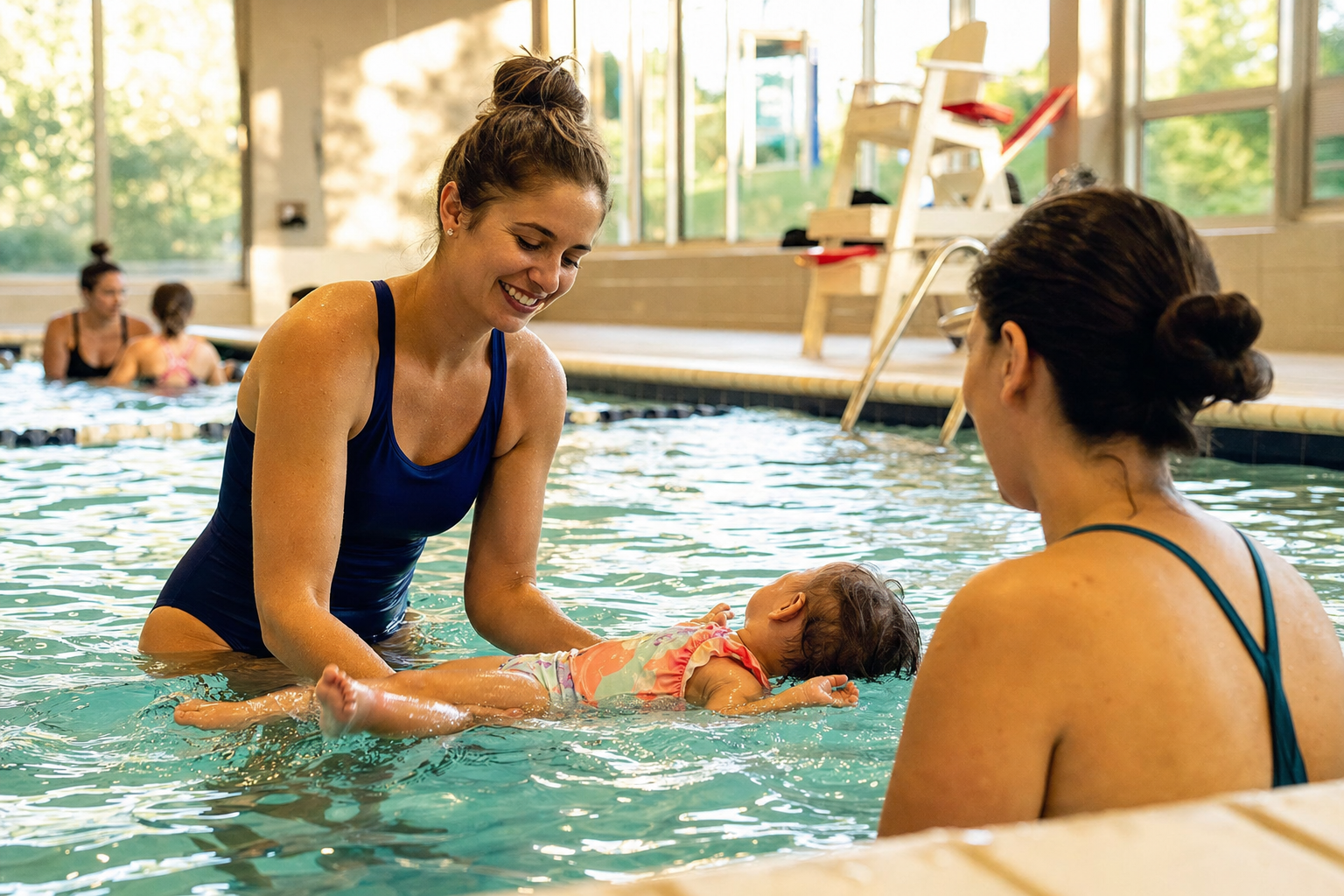
When you hear swim instructors using terms like “floating,” “recovery,” “propulsion,” “breath control,” or “water competency,” it’s not just swim-school jargon. Understanding what these mean—and knowing when your child should begin to show each skill—helps avoid rush, keep expectations age-appropriate (for babies through age three), and keep supervision firm: even confident toddlers aren’t safe alone around water.
Key Terms Parents Should Recognize
Water competency
Water competency is more than just swimming; it’s being able to avoid risk, know basic water skills, get in and out of the water safely, float, control your breath, propel yourself, and use water smarts like recognizing exit points. These are defined in sources like Water Safety USA, which emphasizes entry and exit, floating or treading water, turning around in the water, combining breath control with all swim actions, and leaving the water safely. (watersafetyusa.org)
Entry and exit
Entry means stepping, jumping, or otherwise entering the water (sometimes totally submerging) and resurfacing. Exit means how your child gets out—can they pull up to the side of the pool, climb or reach an exit without a ladder (as they grow older)? These skills are part of the Red Cross’s operational definitions of water competency. (pmc.ncbi.nlm.nih.gov)
Breath control
This means holding or managing breaths underwater, breathing out under water, and then coming back up. Not all children can do this safely or reliably before age two. It’s a critical component of floating, recovery, and even propulsion. (pmc.ncbi.nlm.nih.gov)
Floating (buoyancy)
Floating—front or back—is the ability to stay on the surface without sinking. Back float is especially important because it provides rest and a way to breathe even if movement stops. Learning floating usually comes after a child has water comfort and enough muscle control. (pmc.ncbi.nlm.nih.gov)
Recovery and water orientation
“Recovery” is the ability to resurface after submersion, and regain composure. Orientation means being able to turn around in the water, face toward a safe exit, find the wall or a climb-out point, or rotate 180° to exit. (pmc.ncbi.nlm.nih.gov)
Propulsion
Propulsion is moving forward or backward in the water—using arms or legs. When toddlers begin paddling, kicking, or pushing off walls, that’s propulsion emerging. It tends to develop later than entry or exit, floating, or breath control. (pmc.ncbi.nlm.nih.gov)
What to Expect by Age: 6-36 Months
6–12 Months
Between six and twelve months, babies can gain water competency in very basic ways. Expect head control to improve, beginning of kicking or splashing, very short submersions if voluntary, and assisted back floating or gentle floating with support. Breath control is minimal; propulsion is mostly reflexive movement. Milestones here are about comfort and familiarization rather than full independent skills. (healthychildren.org)
If you want a structured way to build water confidence at home, the 10-Week Plan guides you step by step.
12–24 Months
In the second year, toddlers become more mobile and stronger. They may begin reaching for walls or toys underwater, trying push-off glides, showing more tolerance for submersion, and starting to float with less support. Breath control improves—babies may blow bubbles, hold breath briefly, and come up. Propulsion may appear in small kicks or paddles. Still, most cannot exit the pool without help. (swimy.org)
[[ctababy]]
24–36 Months
By ages two to three, many toddlers begin showing more reliable versions of these skills: longer independent back floats, better breath control, turning around in the water, pushing off the wall, paddling. Some may even swim short distances unsupported in lesson settings—but this is rare before age three. Parent of a two-year-old should expect progress, not perfection. (pmc.ncbi.nlm.nih.gov)
Why Understanding the Sequence Matters
Recognizing that entry, breath control, floating, orientation, and propulsion emerge in stages helps prevent parents from pushing for a full swim stroke too soon. Some programs promote structured measures: for example, the “10-Week Plan” from swimy.org lays out a progressive sequence of water familiarization, floating, roll-float-swim work, and propulsion introduction in a way that lets toddlers build confidence without forcing advanced skills too early. This kind of plan helps both kids and parents see progress without danger.
Supervision is still critical. Even if a toddler can float briefly or paddles well, these abilities don’t provide reliable self-rescue. A toddler’s confidence can mask a lack of real ability; fall, current, sudden loss of buoyancy, clothing—all can overwhelm skills.
Common Mistakes and Safety Caveats
Assuming that brief float equals safety is a common pitfall. A child who floats for a few seconds but can’t orient to exit, control breath, or propel themselves might still drown in only a moment. Never reduce supervision because skills look good; always stay within arm’s reach around age one and two, and keep pools fenced, covers locked, and never leave toddlers unsupervised.
Also avoid comparing toddlers. Each child develops at their own pace. Stress, fear, or just personality differences affect when they really accept back-floating or submersion. A lot of repetition, gentle encouragement, and consistency builds trust—and with it, the skills.
How Parents Can Help at Home
Create water play routines that reinforce water competency. Practice safe entry and exit together: walk in shallow water, help your toddler climb out, and always use grips or wall edges. Float together or with support, gradually reducing your hold. Blow bubbles together—getting used to inhaling and exhaling near water surfaces builds breath control. If your family has access to swim classes, aim for programs rated highly for “progressive approach” and appropriate for the child’s age and comfort level. Seek feedback from teachers on where your child is in the sequence. Programs that emphasize “water familiarization first, floating later, propulsion last” map best to toddler development. Also practice orientation: let toddlers turn, find a wall, or reach an exit.
When to Consult a Pro
If your toddler doesn’t show any interest in water by one year old despite gentle exposure, or if fear or crying prevents participation, a trained infant- or toddler-swim instructor can help. Also consult your pediatrician before formal lessons for babies under six months; many babies can’t yet control their heads, which is necessary for floating and safe submersion. (healthychildren.org)
Water competency for toddlers—knowing what floating, recovery, propulsion, breath control and orientation really mean and recognizing when they’re emerging—lets you support your child as they safely build real skills. Baby swim milestones aren’t a checklist but a sequence: entry → comfort → breath control → floating → propulsion. Keep expectations age-appropriate, stay close by, and celebrate each small step in your child’s swim journey.
120+ swimming exercises sorted by age — with video and instructions. Developed by swim instructors, completely free.

120+ swimming exercises sorted by age — with video and instructions. Developed by swim instructors, completely free.