What Parents Should Wear to Baby Swim Class: Modest, Safe & Pool-Approved Swimwear
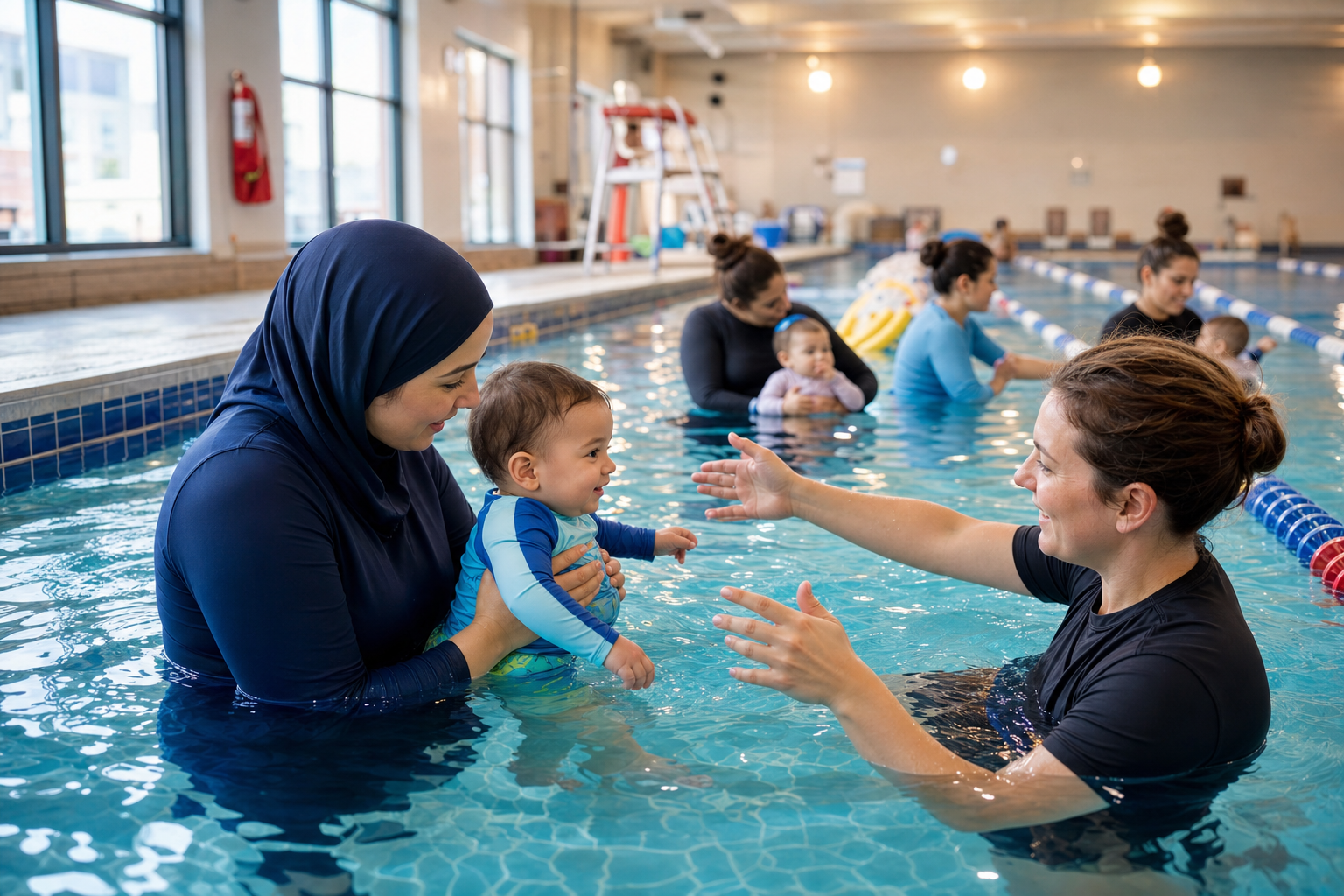
Choosing swimwear for a parent-child class isn’t just about modesty—it’s about safety, movement, and meeting pool rules. If you’ve delayed signing up because you’re not sure what two-handed support, bouncing toddlers, and quick exits require, here’s your trusted guide for what you should wear in the pool when doing parent and baby (0-36 months) swim classes. Includes burkini options and expert-backed advice to help you feel confident and secure in the water.
Why Modest Swimwear Matters for Parent-Baby Classes
You’ll be lifting, holding, turning, and submerging your baby—all while staying not just modest, but safe. Loose or heavy clothing floats up, gets stuck, slows movement, and can be hazardous during transfers in and out of the pool. Pool policies often require fully water-safe fabrics and properly fitting attire to avoid hygiene issues and risks with filters or lifeguard rules. For example, the YMCA’s modest swimwear guidelines stress lightweight, swim-safe materials like stretch Lycra or swim blends over heavy cotton or denim pieces… they actually prohibit them. (gwrymca.org)
“Burkini-style” outfits and modest swim sets made of swim fabric are usually allowed—but only when they comply with pool standards, aren’t transparent when wet, and provide full coverage without restricting arms or grips. (swimming.org)
How to Choose Modest Swimwear That Works
Fabric and Fit First
Choose fabrics designed for water: polyester, nylon, spandex, or elastane blends. These dry quickly, resist chlorine, and hold shape in wet conditions. Avoid cotton, wool, or dress fabrics that soak up water, become see-through, and drag or weigh you down. (noorawear.com) Fit should be snug—not tight, but not loose. In parent-baby classes you need garments that stay in place when lifting your baby, bending to float, or entering and exiting water. Burkinis with a tunic and pants set, rash guards, or swim leggings work well when sized correctly. (swimming.org)
Modesty Styles That Are Pool-Friendly
If you want full coverage, a burkini set (tunics or dresses with leggings plus a swim head cover) is ideal. Long-sleeved swim tops or rash guards, swim leggings, or athletic tights under swim shorts are great for modesty while staying functional. Head scarves or swim hijabs are often accepted if they’re swim fabric, secure, and don’t drag or impair safety. (gwrymca.org)
If you want a structured way to build water confidence at home, the 10-Week Plan guides you step by step.
Make sure any cover-ups are secure and minimal: no untied wraps, flowing skirts, loose tunics, or hoods that float up. Anything that can snag, catch on pool ladders, or block drains poses a risk. For modesty plus safety, thumbs-holes, high necks, and tops that tuck into bottoms help reduce exposure or shifting. (swimy.org)
[[ctababy]]
Questions to Ask Before Your First Class
You and your baby will move through water, so get clarity ahead of time. Ask these questions when you call or visit the pool:
What’s the facility’s policy on modest swimwear or burkini baby swim lessons? Are religious swimsuits allowed? Do they require fitted water-safe fabrics? Are rash guards or leggings accepted? What lengths or head coverings are approved? (swimming.org)
What about pool temperature and lesson duration? For babies under 36 months water around 87°F to 94°F is usual; if it’s cooler, you may need a thermal suit. Longer or colder classes increase importance of warm, secure, fitted layers. (swimy.org)
How many layers for swim diapers or modest outer clothing? Some pools require a two-layer system for diapers. Some modest swim sets must be worn over a proper swimsuit to ensure hygiene and containment. (swimy.org)
Real-Life Swimwear Choices for Moms in Parent-Baby Classes
Try a stretch-blend burkini with full legs and sleeves for full coverage; pick one with a secure zip front and hardware designed not to rust from chlorine. When you use a rash guard, make sure it’s long enough to tuck into bottoms or has spray-short style bottoms. Try combos during bath time or shower to test how things move and weigh once wet.
Some factories now offer modest set swimwear where a long top is snapped inside the shorts or has clips to prevent riding up. If you wear a head covering, go for swim hijabs or scarves that stay put, dry fast, and don’t loop long or have loose ends. For modesty and practicality, skip low cuts, plunges, and bikinis for parent-baby classes unless you’re sure you’ll be comfortable and supported—for example, with a sports-bra-style top beneath.
A helpful structured way some parents use to build comfort and test what works is the 10-Week Plan from swimy.org. This plan gradually introduces layers, swimwear styles, lesson length, and water temperature so that you and your baby both adjust safely and well. (swimy.org)
Final Tips & Safety Caveats
Don’t arrive wearing a loose cover-up expecting to keep it on for the lesson. These float up, snag, block drains, and make exits shivering and hard. Change into swimwear under dry clothes, carry a towel you can wrap quickly, wear shoes or sandals on slippery surfaces, and always check your straps and zips before entering water.
Always check your pool’s splash-or swim policy. Staff or lifeguards may ask that swimwear be changed if it’s not rated for water or is found hanging loosely or dragging. It’s not about modesty vs exposure—it’s about your safety, the safety of your child, and keeping swim class a confident and learning environment for everyone.
When you choose secure, pool-accepted modest swimwear, you’re lighting the way to never missing a baby swim class again—because you know you have what you need, both for modesty and for safety. Your baby gets floated, splashed, giggled with; you stay confident, covered, and focused. That’s what matters most.
120+ swimming exercises sorted by age — with video and instructions. Developed by swim instructors, completely free.

120+ swimming exercises sorted by age — with video and instructions. Developed by swim instructors, completely free.