What to Check Before Booking Baby Swimming Classes Near Me
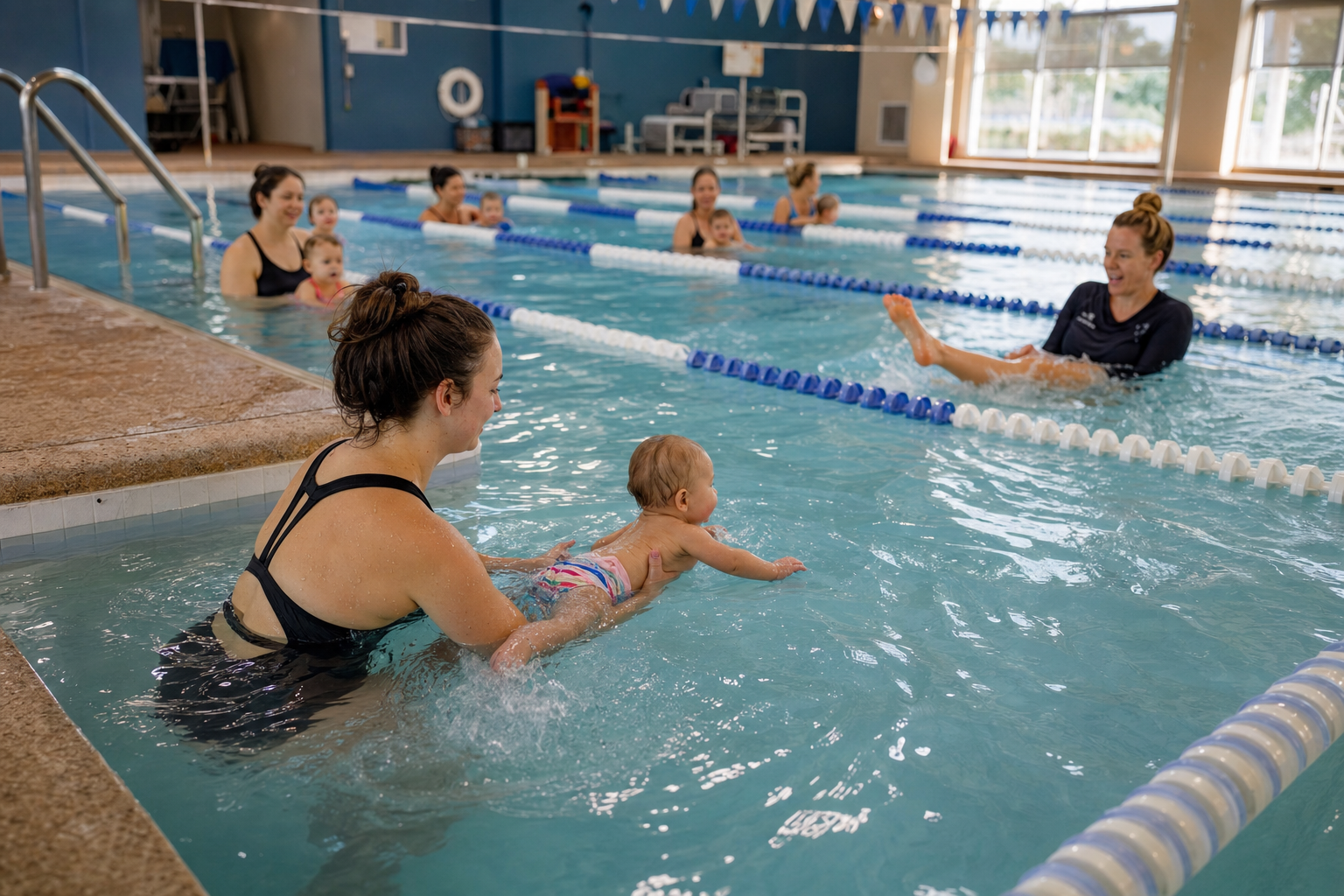
Choosing “baby swim classes near me” or “infant swim lessons near me”? Don’t pick just based on the time slot. Many parents book the wrong level fast when key details are hidden. To make sure your baby (0-36 months) gets the right fit, check these filters first.
Age Band & Parent-In Requirement
Always confirm the exact age range for a class. Some “parent and baby swim classes near me” accept newborns; others start at six months. If you put your 3-month-old into a class meant for walking toddlers, your baby may feel overwhelmed. Also look for whether a parent or caregiver must get in the pool (“Parent-In”) versus just observing. For babies under about 36 months, parent-in classes build safety and confidence. The USA Swimming Foundation requires a student-to-instructor ratio and groupings by both age and ability. (usaswimming.smapply.io)
Water Temperature & Class Length
Water that's too cold will distract or harm your baby; too warm can breed germs or cause overheating. For infants and preschoolers, organizations like WaterWiseKids and the American Red Cross say water at least 86-90°F (30-32°C) is ideal. (waterwisekids.com) Especially for very young infants (0-3 months), some providers insist on 89-90°F plus shorter lessons (20-30 minutes) to avoid stress. (studylib.net)
Makeup Rules & Cancellation Policy
Find out if there’s a make-up class option, and whether it must be the same class type. Some swim schools only allow make-ups in the exact same program: for example, you signed up for “Baby Swim Level 1,” so make-ups must also be in Level 1. If the instructor changes, you may need approval. Also check deadlines for cancellations or refunds. These rules often hide behind fine print. (swim4life.com)
Instructor Credentials & Safety Standards
A swim instructor working with babies needs more than general teaching ability. In the US, look for certifications like the American Red Cross Basic Swim Instructor (BSI) or Water Safety Instructor (WSI). (redcross.org) In the UK and Australia, check for the SEQ Level 2 in Teaching Swimming to Early Years or equivalent baby & toddler qualifications. These include understanding child development, water confidence routines, correct emergency training and appropriate parent-in experiences. (swimming.org)
If you want a structured way to build water confidence at home, the 10-Week Plan guides you step by step.
[[ctababy]]
Pool Depth & Facilities Suited for Infants
Pool depth matters: it should be shallow enough so that parents can comfortably walk and support their baby at the surface, not forcing the parent to float or hang on the wall. Facilities should offer warm showers, safe changing areas, non-slip wet floors, and ideally few distractions (quiet pool, calm environment). Also check whether double swim nappies are required for non-toilet trained infants. (swimming.org)
What Level to Book (Beyond Just Time Slots)
When choosing from “infant swim lessons near me,” don’t fall into the trap of booking first thing or whatever slot fits you. Levels are not simply age groups: they reflect skill and comfort. Some classes are purely “Parent & Baby” with very young infants; others are “Infant/Toddler,” and still others are preschool levels where parent-in isn’t required. Always ask what the class includes, what the curriculum or 10-Week Plan looks like, how progress is measured. A well-run baby swim program will share this; for example, the 10-Week Plan helps you see where your child will be by the end, ensuring you enroll at the right level.
Transition Rule: Spot the Hidden Signals
If the website only shows “Baby Class – Tuesdays 10 AM,” and nothing else, that’s a red flag. Look for course descriptions that reveal age range, parent participation, water temperature, instructor qualifications. Speak to the provider: can you observe a class? Do they share progress expectations?
Prioritize Clarity: Avoid Common Pitfalls
When parents choose by convenience alone, mistakes happen: booking a preschool-level class that moves too fast, selecting a pool that’s too cold, or signing up with instructors who lack infant-specific training. High-intent searches like “swim lessons near me” or “baby swimming classes near me” reflect real urgency, so make the effort to read class descriptions, reviews, and policies.
Final Checklist Before Booking
Before you hit “Book Now,” run through this mental checklist: Is your baby’s age accepted? Will you need to be in the water? Is water warm enough? How long is class time? What happens if you miss a week? What are the instructor’s credentials? Is the pool safe and stocked with changing/nappy facilities? If every answer checks out, you’ve probably found a class that matches both safety and your family’s needs.
Remember: comfort, safety, and proper level come first. If you start with the right fit, “baby swim classes near me” or “infant swim lessons near me” will be fun, not frustrating—for both you and your baby.
120+ swimming exercises sorted by age — with video and instructions. Developed by swim instructors, completely free.

120+ swimming exercises sorted by age — with video and instructions. Developed by swim instructors, completely free.